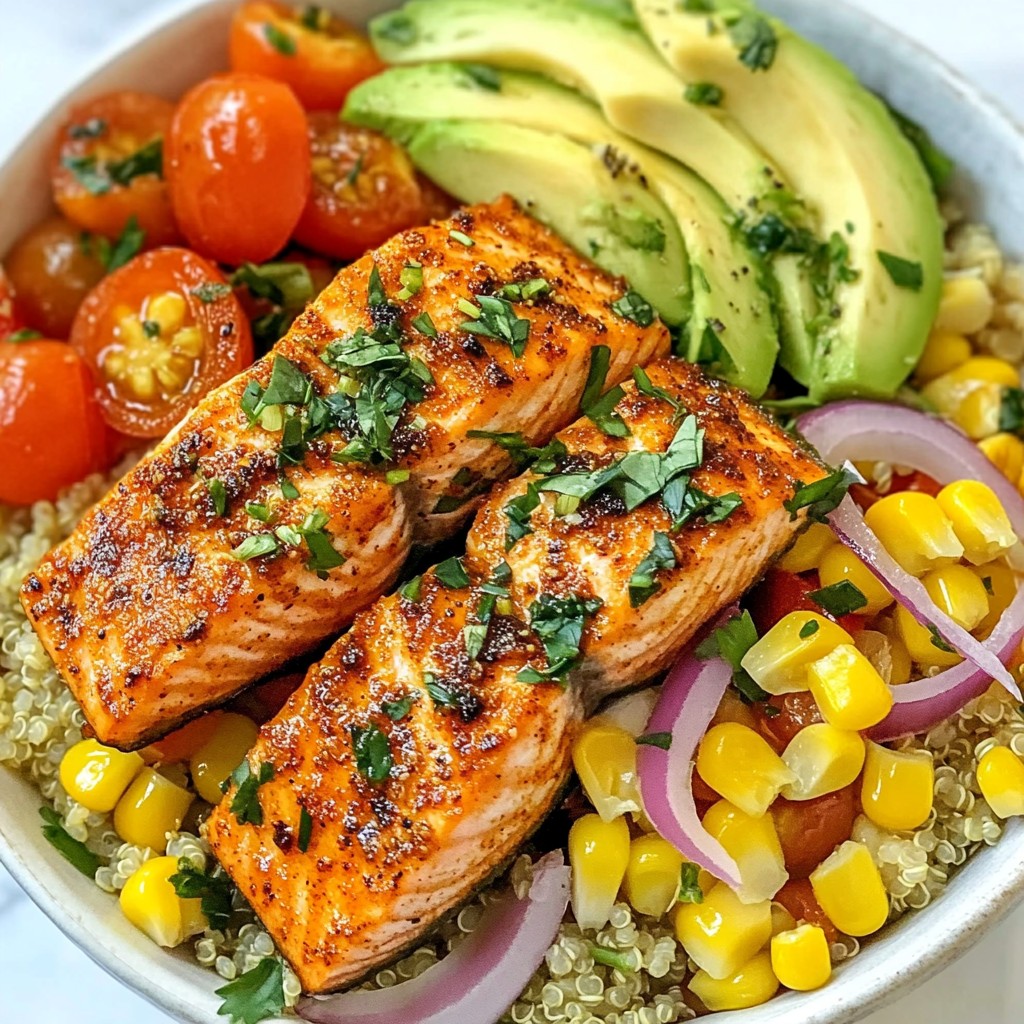
Looking for a meal that’s packed with flavor and easy to make? Cajun Salmon Bowls are your answer! I’ll guide you through each step, from selecting perfect salmon to adding fresh toppings. You’ll create a vibrant, satisfying dish that’s full of life and taste. Let’s turn your kitchen into a Cajun paradise and enjoy every bite together! Dive into this delicious recipe now!
Why I Love This Recipe
- Bold Flavors: This recipe features a delicious blend of Cajun spices that elevate the salmon and make each bite packed with flavor.
- Healthy Ingredients: With quinoa, fresh vegetables, and avocado, this dish is not only tasty but also packed with nutrients.
- Quick and Easy: Ready in just 40 minutes, it's perfect for busy weeknights without sacrificing taste or quality.
- Customizable Bowls: Feel free to add or substitute your favorite veggies and grains, making it a versatile meal option for everyone.
Ingredients
Main Ingredients for Cajun Salmon Bowls
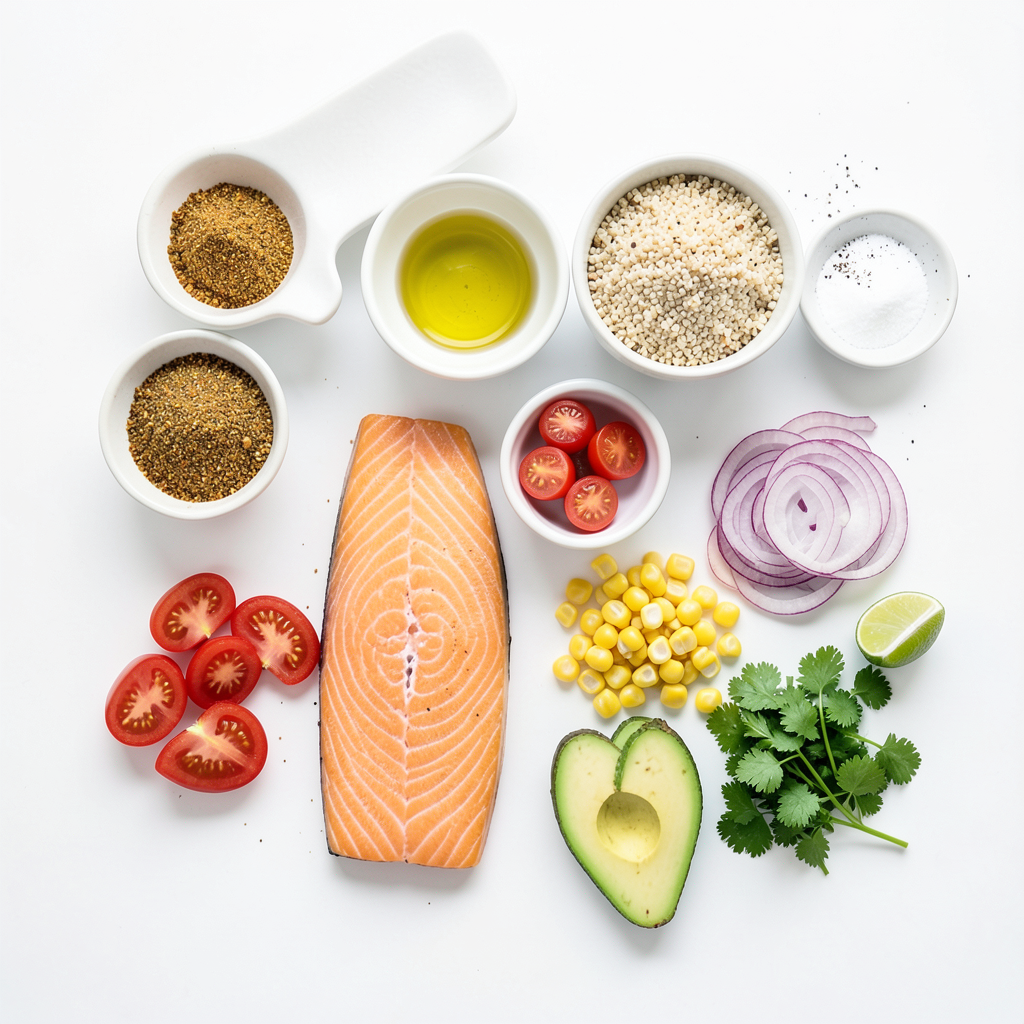
- 2 salmon fillets (6 oz each)
- 2 tablespoons Cajun seasoning
- 1 tablespoon olive oil
Cajun salmon bowls shine because of the main ingredients. The salmon gives a rich taste and healthy fats. I use Cajun seasoning to bring bold, spicy flavors. A little olive oil adds moisture and helps the spices stick.
Grain and Vegetable Components
- 1 cup quinoa, rinsed
- 2 cups vegetable broth
- 1 cup cherry tomatoes, halved
- 1 cup corn kernels (fresh or frozen)
Quinoa serves as the hearty base. It has protein and fiber. Cooking it in vegetable broth gives it flavor. Cherry tomatoes add sweetness and color. Corn kernels bring a nice crunch and extra nutrients.
Toppings and Garnishes
- 1 avocado, sliced
- 1/2 cup red onion, thinly sliced
- 1/4 cup fresh cilantro, chopped
- Juice of 1 lime
Toppings make the dish fun and fresh. Sliced avocado adds creaminess. Red onion gives a sharp bite. Fresh cilantro enhances the aroma and taste. A squeeze of lime juice ties everything together with a zesty finish.
Step-by-Step Instructions
Preparing the Quinoa
To cook the quinoa, start with a medium saucepan. Bring 2 cups of vegetable broth to a boil. Add 1 cup of rinsed quinoa. Lower the heat to low, cover, and simmer for 15 minutes. This lets the quinoa absorb the broth. After 15 minutes, fluff it with a fork. This keeps it light and fluffy. Tips for perfectly fluffy quinoa:
- Rinse the quinoa before cooking to remove bitterness.
- Use vegetable broth for more flavor.
- Let it sit covered for a few minutes after cooking.
Seasoning the Salmon
Rub 2 salmon fillets with 1 tablespoon of olive oil. Next, coat them with 2 tablespoons of Cajun seasoning. Make sure to cover all sides well. Let the salmon sit for about 10 minutes. This helps the flavors mix and soak in. Importance of letting it sit:
- Sitting time allows the spices to stick better.
- It enhances the taste of the salmon.
Cooking the Salmon
Heat a non-stick skillet over medium-high heat. Place the salmon fillets skin-side down. Cook for 4-5 minutes on each side. Look for the salmon to become flaky. Remove the salmon from the skillet and keep it warm. Cooking times and temperature tips:
- Adjust time based on the thickness of the fillets.
- A little crispy skin adds great texture.
Sautéing the Vegetables
After cooking the salmon, use the same skillet. Add 1 cup of halved cherry tomatoes and 1 cup of corn. Sauté for 3-4 minutes. The tomatoes should start to blister. Season with salt and pepper to taste. Timing for adding tomatoes and corn:
- Add corn and tomatoes after cooking the salmon.
- This keeps the veggies fresh and bright.
Assembling the Bowls
Start with a base of quinoa in each bowl. Divide the sautéed tomatoes and corn among the bowls. Top each bowl with a salmon fillet. Add slices of avocado and red onion for color. Presentation tips:
- Arrange ingredients in sections for a vibrant look.
- Serve with a lime wedge for a fresh touch.
Tips & Tricks
Perfecting the Salmon
To choose the best salmon, look for bright color and fresh smell. The flesh should be firm and moist. Wild-caught salmon often has better flavor than farmed. You can grill or bake salmon for a tasty meal. Grilling adds a nice smoky flavor, while baking keeps it moist. If you grill, use a medium heat and a few minutes on each side. Baking requires a preheated oven at 400°F for about 12-15 minutes.
Enhancing Flavor
For side dishes, consider a fresh green salad or roasted veggies. These pair nicely with the rich salmon. You can also serve with garlic bread for a crunchy contrast. For toppings, sliced jalapeños add heat, while feta cheese brings creaminess. A dollop of yogurt can add tang, too.
Meal Prep Tips
You can make Cajun salmon bowls ahead of time. Cook the quinoa and salmon, then store them separately. This keeps everything fresh and tasty. For leftovers, use airtight containers to keep them safe in the fridge. They last about three days. When reheating, use a low heat to avoid drying out the salmon.
Pro Tips
- Perfectly Flaky Salmon: To achieve the best texture, cook the salmon until it just flakes apart when you gently poke it with a fork. Keep an eye on cooking times as they can vary.
- Quinoa Rinsing: Always rinse quinoa before cooking to remove its natural coating, called saponin, which can make it taste bitter. This step ensures a nutty flavor and fluffy texture.
- Customize Your Veggies: Feel free to swap out the cherry tomatoes and corn for other seasonal vegetables, such as bell peppers or zucchini, to keep the dish fresh and vibrant.
- Fresh Herbs: Adding fresh herbs like cilantro not only enhances flavor but also adds a pop of color. Consider using parsley or basil for a different twist.
Variations
Different Protein Options
You can swap salmon for other fish like tilapia or cod. Both options have a mild taste. If you prefer chicken, use boneless, skinless chicken breasts. Simply season and cook them like the salmon. For a plant-based choice, tofu works well. Press it to remove water, then season and cook until golden.
Quinoa Alternatives
If you want a change from quinoa, try rice or couscous. Brown rice adds a nutty flavor. For couscous, follow the package instructions to cook. You can also use farro or bulgur. Each grain has its own cooking time, so make sure to check that.
Flavor Adjustments
To change the spice level, use more or less Cajun seasoning. You can also try different spice blends. Adding fresh herbs like parsley or dill can enhance flavors. If you want a kick, add cayenne pepper or hot sauce. For a milder dish, skip the heat and add more lime juice.
Storage Info
How to Store Leftover Cajun Salmon Bowls
To keep your Cajun Salmon Bowls tasty, use airtight containers. Glass or plastic containers with tight lids work best. Make sure to cool the bowl before sealing it. This helps keep the food fresh.
Store the bowls in the fridge. They will stay safe to eat for about three days. For best taste, eat them within this time.
Reheating Tips
When reheating your salmon and quinoa, use the microwave or a skillet. For the microwave, heat on medium for 1-2 minutes. Check to avoid overcooking. You want the salmon warm, not dry.
If using a skillet, add a splash of water. Cover it to keep moisture in. Heat on low for about 5 minutes. This method helps keep the salmon flaky.
Shelf Life
In the fridge, cooked salmon lasts about 3 days. Quinoa can last about 5 days. Check for any strange smells or colors. If the salmon looks dull or mushy, it’s time to toss it. Always trust your senses!
FAQs
What to serve with Cajun Salmon Bowls?
You can serve many side dishes with Cajun Salmon Bowls. Here are some ideas:
- Steamed green beans
- Roasted Brussels sprouts
- Side salad with mixed greens
- Garlic bread for a crunchy bite
- Coleslaw for a refreshing crunch
These sides add color and flavor. They make the meal more filling.
Can I make Cajun Salmon Bowls gluten-free?
Yes, you can easily make Cajun Salmon Bowls gluten-free. Here are some substitutions:
- Use gluten-free Cajun seasoning.
- Ensure the vegetable broth is gluten-free.
- Quinoa is naturally gluten-free and a great choice.
Always check labels to be safe. This way, everyone can enjoy the dish.
How can I adjust the spice level?
You can adjust the spice level to fit your taste. Here are some tips:
- For milder flavors, use less Cajun seasoning.
- Add a dollop of sour cream to cool it down.
- For spicier bowls, use extra Cajun seasoning or add hot sauce.
Experiment until you find your perfect heat level!
What is the nutritional information for Cajun Salmon Bowls?
Cajun Salmon Bowls are nutritious and filling. Here’s a rough breakdown:
- Approximate calories: 600 per serving
- Protein: 40g from the salmon
- Carbs: 50g mainly from quinoa and corn
- Healthy fats: 20g from olive oil and avocado
These bowls offer a balanced meal with good protein and healthy fats.
Cajun salmon bowls combine fresh flavors and easy steps. We covered key ingredients like salmon, quinoa, and vibrant toppings. You now know how to prepare the dish, season the salmon, and cook everything perfectly. With tips for variations and meal prep, you can make this meal fit your taste.
Enjoy crafting your bowls and impressing others with this tasty recipe. Taste the richness of Cajun cuisine today!