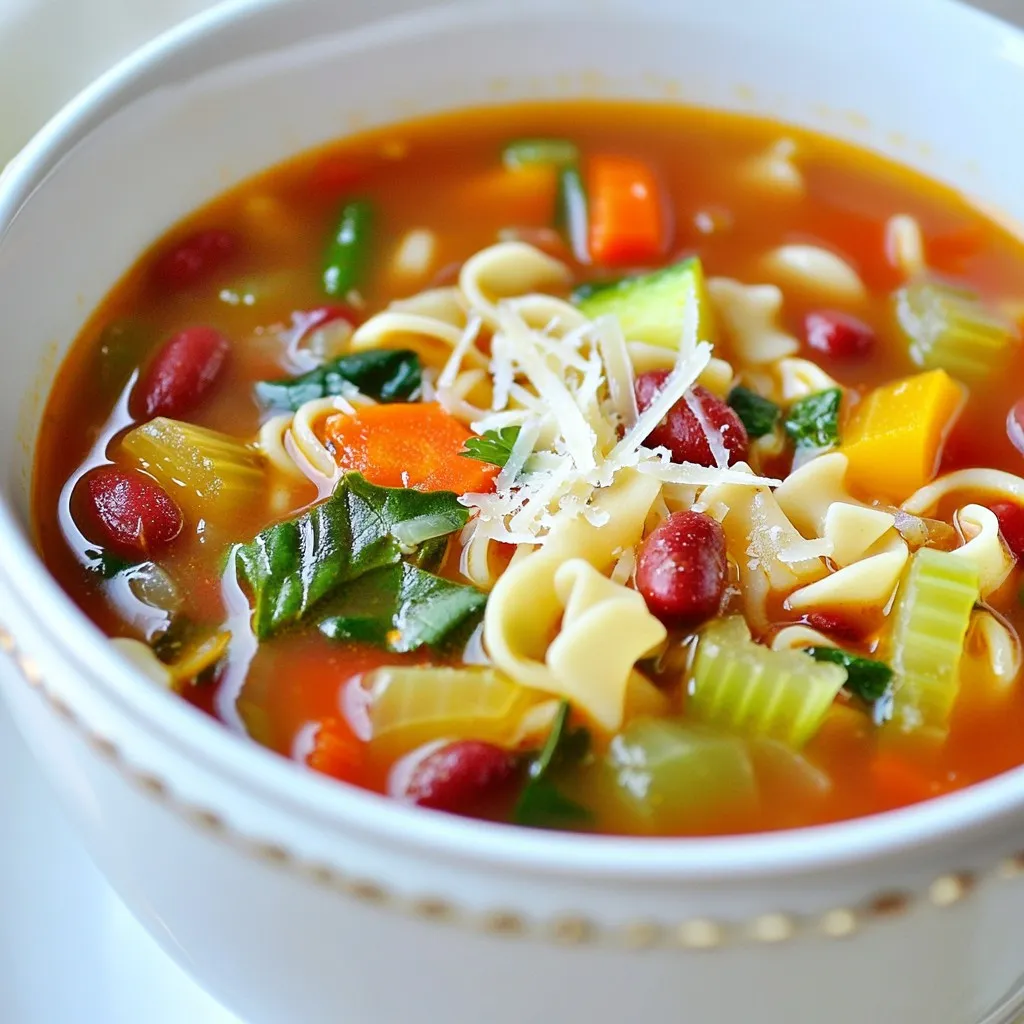
Are you ready to savor a warm and hearty bowl of Classic Minestrone with Gluten-Free Noodles? This comforting Italian soup is packed with fresh veggies and flavor. With easy steps and tasty options, you’ll make a delightful dish that everyone can enjoy, even on gluten-free diets. Join me as we dive into the ingredients, share helpful tips, and explore variations—let’s make your next meal a hit!
Why I Love This Recipe
- Healthy and Nutritious: This minestrone is packed with a variety of vegetables and legumes, making it a wholesome meal option that is both filling and nourishing.
- Customizable: You can easily swap out vegetables or beans based on what you have on hand, making it a versatile dish suitable for any season.
- Quick and Easy: With a prep time of just 15 minutes and a total cook time of 40 minutes, this recipe is perfect for a weeknight dinner.
- Deliciously Satisfying: The combination of flavors from the herbs, fresh vegetables, and gluten-free noodles creates a comforting and hearty soup.
Ingredients
List of Essential Ingredients for Classic Minestrone
To make a tasty Classic Minestrone with gluten-free noodles, you need these key ingredients:
– 1 tablespoon olive oil
– 1 small onion, diced
– 2 cloves garlic, minced
– 2 medium carrots, diced
– 2 celery stalks, diced
– 1 medium zucchini, diced
– 1 cup green beans, chopped
– 1 can (15 oz.) diced tomatoes
– 4 cups vegetable broth
– 1 teaspoon dried oregano
– 1 teaspoon dried basil
– Salt and pepper to taste
– 1 cup gluten-free noodles of choice
– 1 cup canned kidney beans, rinsed and drained
– 1 cup fresh spinach or kale, chopped
– Grated Parmesan (optional, for serving)
Substitutions for Fresh Ingredients
You can swap fresh items if you need. Use frozen veggies instead of fresh ones. They work well. Canned beans can replace dried beans if you are short on time. For fresh spinach or kale, you can use frozen ones. Just thaw them before adding. The flavor will still be good.
Importance of Gluten-Free Noodles
Gluten-free noodles make this dish friendly for those with gluten issues. They give a nice texture to the soup. They soak up flavors well, just like regular noodles. Choose your favorite type, like rice noodles or quinoa pasta. Always check the cooking time. They may need less or more time than regular noodles. Enjoy your soup worry-free!

Step-by-Step Instructions
Preparing the Soup Base
Start by heating 1 tablespoon of olive oil in a large pot over medium heat. Once hot, add 1 small diced onion. Sauté for 3 to 4 minutes until it turns soft and clear. Next, add 2 minced garlic cloves, 2 diced carrots, and 2 diced celery stalks. Cook these for about 5 minutes while stirring. You want them to soften but not brown.
Adding Vegetables and Seasoning
Now it’s time to add more veggies! Stir in 1 diced zucchini and 1 cup of chopped green beans. Cook them for another 3 minutes. This step adds great color and flavor. Next, pour in 1 can of diced tomatoes with their juice and 4 cups of vegetable broth. Add 1 teaspoon each of dried oregano and basil. Season with salt and pepper. Bring the soup to a gentle simmer.
Incorporating Gluten-Free Noodles and Beans
When the soup simmers, add 1 cup of gluten-free noodles. Cook them as per the package instructions, usually around 6 to 8 minutes. In the final minutes, stir in 1 cup of rinsed canned kidney beans and 1 cup of chopped spinach or kale. This will give the soup a nice green boost. Let everything heat through and taste to adjust the seasoning. Enjoy your warm, hearty bowl!
Tips & Tricks
Ensuring Flavor and Depth in Your Minestrone
To make your minestrone rich in flavor, use fresh herbs. Fresh basil and oregano add bright notes. Always taste as you cook. Adjust seasoning with salt and pepper. You can also enhance taste with a splash of lemon juice. This adds a nice zing. Don’t forget to sauté the onion and garlic until soft. This step brings out their natural sweetness. Use good quality vegetable broth for the base. A flavorful broth makes a big difference in taste.
Cooking Tips for Perfect Gluten-Free Noodles
When cooking gluten-free noodles, follow package instructions closely. They often cook faster than regular noodles. To prevent mushiness, cook them al dente. Keep an eye on them as they boil. You can add them directly to the soup. Or cook them separately and mix in just before serving. If you cook them in the soup, stir gently. This helps keep noodles intact. Also, rinse them with cold water after cooking to stop the cooking process.
Suggested Garnishes for Serving
Garnishes can elevate your minestrone. Fresh herbs like parsley or basil brighten the dish. A sprinkle of grated Parmesan adds creaminess. If you want a vegan option, skip the cheese. Instead, drizzle with olive oil for richness. You can also add a squeeze of lemon juice for a fresh touch. Consider serving with crusty bread on the side. It’s perfect for dipping and adds a nice crunch. Enjoy your meal!
Pro Tips
- Use Fresh Herbs: Fresh herbs like basil and parsley enhance the flavor of your minestrone. Add them just before serving for a vibrant taste.
- Customize Your Veggies: Feel free to substitute or add other seasonal vegetables like bell peppers or kale to make the soup your own.
- Perfect Your Broth: For an even richer flavor, consider using homemade vegetable broth instead of store-bought.
- Storage Tips: Store leftover soup in an airtight container in the fridge for up to 3 days. Reheat gently on the stove for best results.
Variations
Vegetarian vs. Non-Vegetarian Options
You can make minestrone in two main ways: vegetarian or non-vegetarian. If you want a hearty vegetarian soup, stick to the recipe as is. The vegetable broth and beans offer great protein and flavor. For a non-vegetarian twist, add diced chicken or Italian sausage. Cook the meat in the pot first, then add the veggies and broth. This gives the soup a rich, savory taste.
Seasonal Vegetable Swaps
Minestrone is perfect for using seasonal veggies. In spring, add fresh peas and asparagus. In summer, toss in ripe tomatoes and bell peppers. As fall arrives, sweet potatoes and butternut squash shine in this dish. Winter brings root vegetables like parsnips and turnips. These swaps keep the soup fresh and exciting all year round.
Different Types of Gluten-Free Noodles
When it comes to gluten-free noodles, you have options. Brown rice noodles are a popular choice. They hold their shape well and add a nice texture. Quinoa noodles are another great option, packed with protein. If you want something quick, use gluten-free pasta made from corn. Each type of noodle has its own unique flavor and texture. Experiment to find your favorite!
Storage Info
Proper Storage Techniques for Leftover Soup
Store leftover minestrone in an airtight container. Let the soup cool first. Keeping it cool helps keep flavors fresh. Use glass or plastic containers. Make sure to leave some space at the top. This gives the soup room to expand if frozen.
Reheating Tips for Best Flavor and Texture
When reheating, use a pot on low to medium heat. Stir often to prevent sticking. You can also use the microwave. Heat in short bursts, stirring in between. Add a splash of broth if the soup looks thick. This keeps it flavorful and smooth.
Freezing Minestrone for Future Meals
To freeze minestrone, let it cool completely. Use freezer-safe bags or containers. Label them with the date. It can last for up to three months. When ready to eat, thaw in the fridge overnight. Reheat on the stove or in the microwave. Enjoy the taste of your homemade soup anytime!
FAQs
Can I make this Minestrone Vegan?
Yes, you can easily make this Minestrone vegan. Simply skip the optional Parmesan cheese. Use vegetable broth instead of chicken broth. This soup is packed with healthy veggies and beans, making it a filling and tasty choice.
What are the best gluten-free noodle options?
When choosing gluten-free noodles, look for options like rice noodles, quinoa noodles, or brown rice pasta. These noodles cook well and add great texture to the soup. I recommend checking the cooking time on the package, as it can vary.
How long can I store leftover Minestrone?
You can store leftover Minestrone in the fridge for up to four days. Make sure to keep it in an airtight container. For longer storage, you can freeze it. Minestrone can last in the freezer for up to three months. Just thaw and reheat when you’re ready to enjoy it again!
Minestrone is a tasty soup full of rich flavors and healthy ingredients. You learned about essential ingredients, substitutions, and the need for gluten-free noodles. I shared a step-by-step guide to make your soup easy and fun.
With tips for flavor, variations for every diet, and storage ideas, you can enjoy this meal any time. Always remember, cooking is about joy and creativity. Now, grab your pot and start making your own delicious minestron