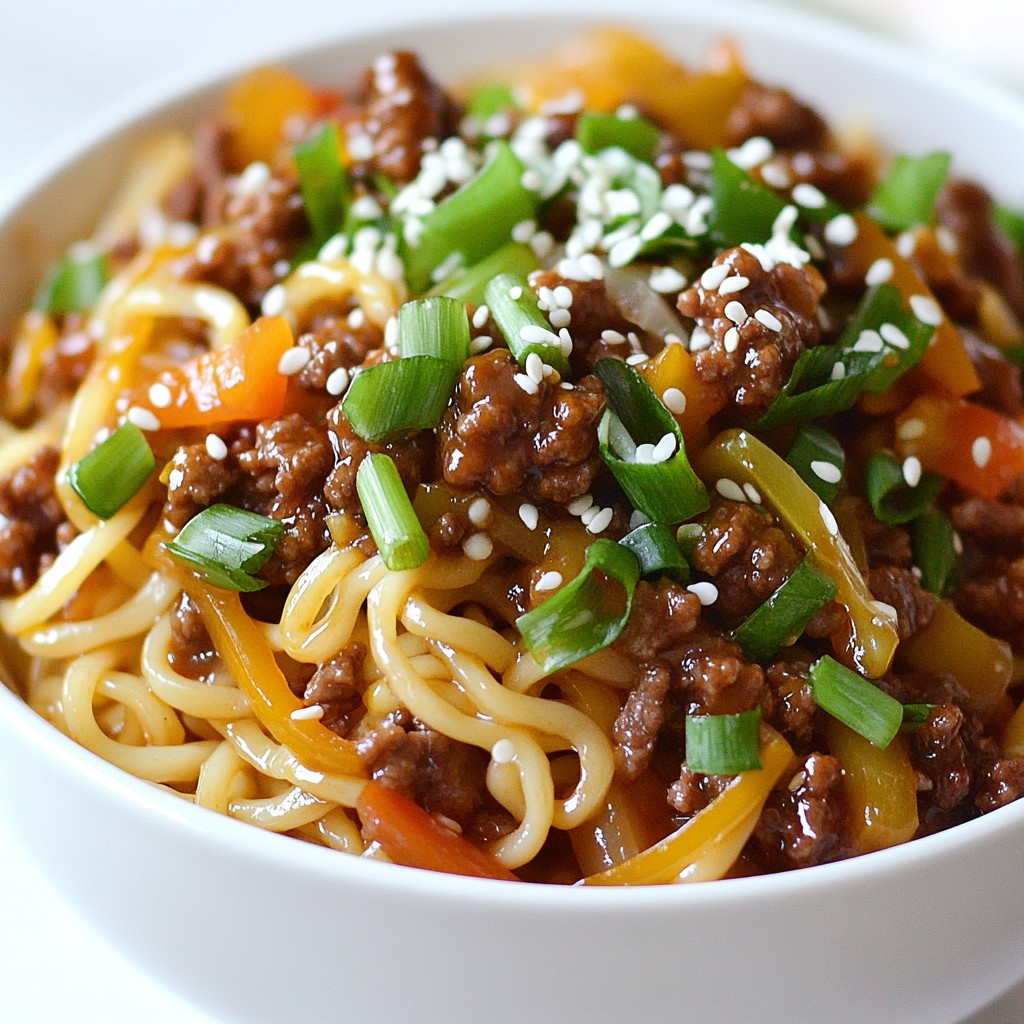
Craving a tasty and easy meal? Mongolian Ground Beef Noodles are just what you need! This dish combines tender beef, flavorful sauce, and soft noodles for a perfect family dinner. You won’t need fancy skills or hard-to-find ingredients. Whether you’re a kitchen pro or just starting, my guide will help you create this delightful dish in no time. Let’s dive into the fun of cooking!
Why I Love This Recipe
- Quick and Easy: This recipe comes together in just 30 minutes, perfect for busy weeknights when you want a delicious meal without spending hours in the kitchen.
- Flavorful Combination: The combination of garlic, ginger, and soy sauce creates a rich and savory flavor profile that elevates the ground beef and vegetables.
- Customizable: You can easily swap out the vegetables or adjust the spice level to suit your taste, making it a versatile dish for any palate.
- Great for Meal Prep: This dish stores well in the fridge, making it a fantastic option for meal prep or leftovers, so you can enjoy it throughout the week.
Ingredients
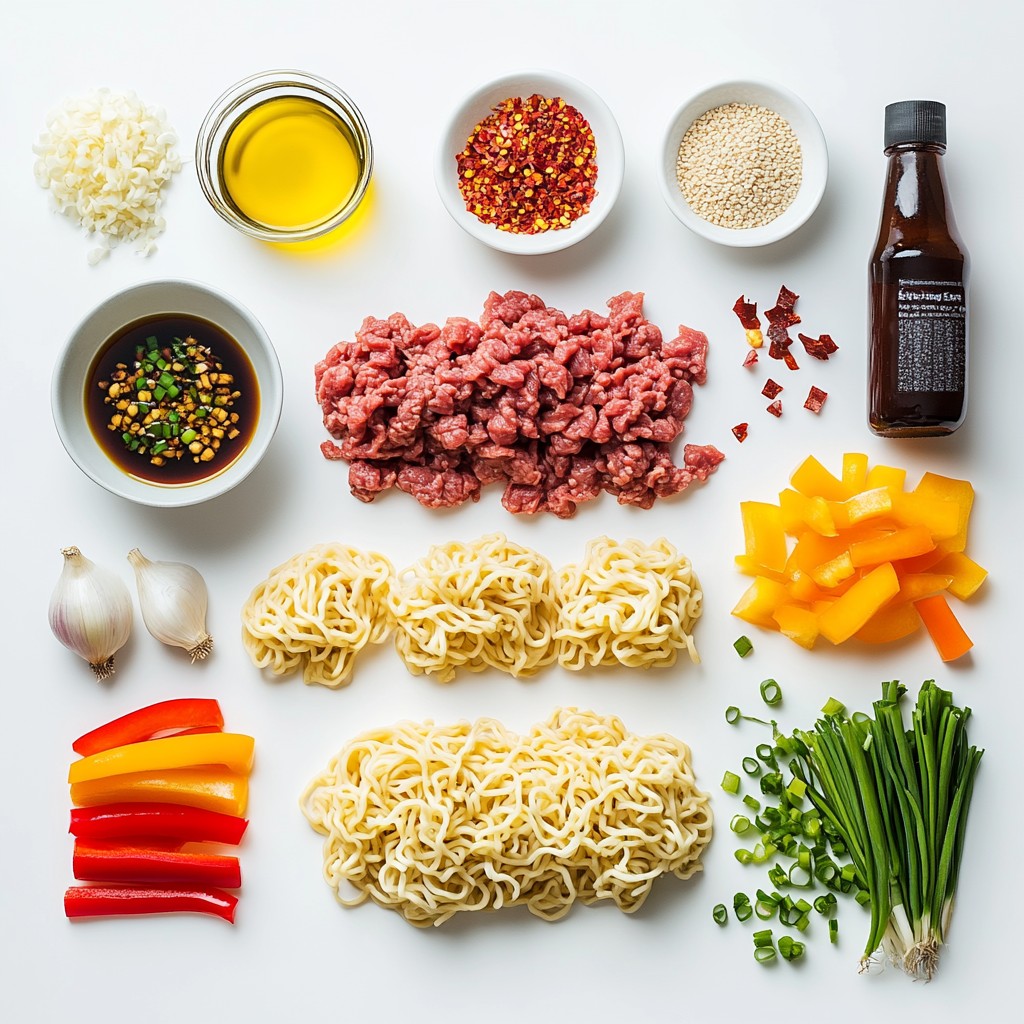
List of Ingredients
- 1 lb ground beef
- 8 oz egg noodles
- 2 tablespoons vegetable oil
- 1 onion, thinly sliced
- 1 bell pepper, thinly sliced (any color)
- 3 cloves garlic, minced
- 1 inch ginger, minced
- 1/4 cup soy sauce
- 2 tablespoons brown sugar
- 1 tablespoon sesame oil
- 1/2 teaspoon red pepper flakes (adjust to taste)
- 3 green onions, chopped (for garnish)
- Sesame seeds (for garnish)
Measuring Ingredients
When making Mongolian Ground Beef Noodles, precise measurements help. Use a kitchen scale for ground beef. A measuring cup works well for liquids. For dry ingredients like brown sugar, use a spoon to fill the cup, then level it off. This ensures balanced flavors in your dish.
Ingredient Substitutions
You can swap some ingredients if needed. If you don’t have ground beef, ground turkey or chicken works too. For the noodles, use rice noodles or udon noodles for a different texture. If you want less soy sauce, try low-sodium soy sauce or tamari. Want a sweeter taste? Maple syrup or honey can replace brown sugar. Don't have sesame oil? Olive oil can be a good substitute, but it changes the flavor a bit.
Step-by-Step Instructions
Cooking the Noodles
Start by boiling a large pot of water. Add 8 oz of egg noodles to the pot. Cook them until they are al dente, as per the package instructions. This usually takes about 6-8 minutes. Once done, drain the noodles and set them aside.
Browning the Beef
Next, heat 2 tablespoons of vegetable oil in a large skillet or wok over medium-high heat. Once the oil is hot, add 1 lb of ground beef. Break the beef apart with a spatula as it cooks. Stir it well until it turns brown, which should take around 5-7 minutes. If there is too much fat, carefully drain it from the skillet.
Incorporating Vegetables and Sauces
Now, add the sliced onion and bell pepper to the skillet with the browned beef. Cook them for about 3-4 minutes, stirring often. You want the veggies to soften a bit. Then, stir in 3 cloves of minced garlic and 1 inch of minced ginger. Cook these for another 1-2 minutes until you smell their aroma.
In a small bowl, mix together 1/4 cup of soy sauce, 2 tablespoons of brown sugar, 1 tablespoon of sesame oil, and 1/2 teaspoon of red pepper flakes. Pour this sauce over the beef and vegetables, stirring to coat everything well. Let it cook for an additional 2-3 minutes to let the flavors blend.
Combining with Noodles
Finally, add the cooked noodles to the skillet. Toss everything together gently, making sure the noodles are well coated with the sauce. Cook for an extra minute just to heat everything through. Then, remove from heat and get ready to serve.
Tips & Tricks
Perfecting the Flavor
To make your Mongolian ground beef noodles shine, focus on the sauce. The mix of soy sauce, brown sugar, and sesame oil gives the dish depth. You can adjust the red pepper flakes for heat. Want a sweeter touch? Add more brown sugar. If you like it savory, increase the soy sauce. Taste the sauce before adding it to the skillet. This step helps you find the perfect balance.
Cooking Tips for Beginners
If you're new to cooking, don’t worry! Start by prepping all your ingredients first. Slice the onion and bell pepper thinly. Mince the garlic and ginger. This makes cooking smoother. Remember to cook the beef until it’s brown. This adds flavor. When you add vegetables, stir them often. This keeps them from burning. Finally, toss the noodles with the beef and sauce gently. This ensures each noodle gets coated well.
Presentation and Serving Suggestions
For a lovely presentation, garnish each bowl with green onions and sesame seeds. This adds color and crunch. Serve the noodles hot for the best taste. You can also pair them with a side of steamed broccoli or a fresh salad. This adds a nice balance to your meal. Enjoy your delicious, homemade Mongolian ground beef noodles!
Pro Tips
- Use Fresh Ingredients: Fresh vegetables and herbs will enhance the flavor and texture of your dish, making it more vibrant and appealing.
- Adjust Spice Levels: Customize the amount of red pepper flakes to suit your taste. Start with a small amount and add more if you prefer a spicier dish.
- Perfectly Cooked Noodles: To avoid mushy noodles, ensure you cook the egg noodles to al dente according to package instructions. They will continue to cook slightly when combined with the beef mixture.
- Garnish for Presentation: Don’t skip the green onions and sesame seeds! They not only add a pop of color but also enhance the overall flavor of the dish.
Variations
Vegetarian Option
You can make a tasty vegetarian version. Replace ground beef with 1 lb of tofu or tempeh. Crumble the tofu or slice the tempeh. Cook them the same way you would the beef. This swap keeps the dish filling and flavorful.
Adding More Vegetables
Want to add more color and crunch? Toss in some vegetables. Try carrots, broccoli, or snap peas. Slice them thinly for quick cooking. Add them after the onion and bell pepper. This way, they stay crisp and fresh.
Alternative Sauces
Feel free to mix up the sauce. You can replace soy sauce with tamari for a gluten-free option. Add hoisin sauce for sweetness or sriracha for heat. Experiment with different flavors to find your favorite twist.
Storage Info
Storing Leftovers
After enjoying your Mongolian ground beef noodles, store any leftovers in an airtight container. Make sure to let them cool first. Keep them in the fridge for up to three days. This way, the flavors stay fresh and tasty.
Reheating Instructions
To reheat your noodles, use a microwave or a skillet. If using a microwave, place the noodles in a bowl. Add a splash of water and cover it. Heat in 30-second intervals until warm. If using a skillet, add a bit of oil over medium heat. Stir-fry the noodles for about 3-5 minutes until heated through.
Freezing Options
You can freeze Mongolian ground beef noodles for longer storage. Use a freezer-safe container or a zip-top bag. Make sure to remove as much air as possible. They can last up to two months in the freezer. When ready to eat, thaw in the fridge overnight before reheating.
FAQs
What is Mongolian Ground Beef Noodles?
Mongolian Ground Beef Noodles is a tasty dish that combines ground beef and egg noodles. It has a savory sauce made with soy sauce, brown sugar, and sesame oil. You’ll find colorful veggies like bell peppers and onions added for crunch. This dish is quick to make and perfect for busy weeknights.
How can I adjust the spice level?
You can easily change the spice level in this dish. The red pepper flakes add heat. If you want it milder, use less or skip them. If you like it spicy, add more red pepper flakes. You can also try fresh chili peppers for a different flavor. Always taste as you go to get it just right.
Can I use other types of noodles?
Yes, you can use other types of noodles if you like. Rice noodles or udon noodles work well too. Just make sure to cook them according to their package instructions. Each noodle type will give the dish a unique texture and taste. Experiment to find your favorite!
This blog post covered how to make Mongolian Ground Beef Noodles. We discussed ingredients to use, how to measure them, and what to substitute. You learned the steps for cooking, from browning beef to serving. I shared tips for flavor and presentation. You also saw variations, storage info, and answers to common questions.
Now, you can create this tasty dish with ease. Enjoy experimenting and sharing your meals!