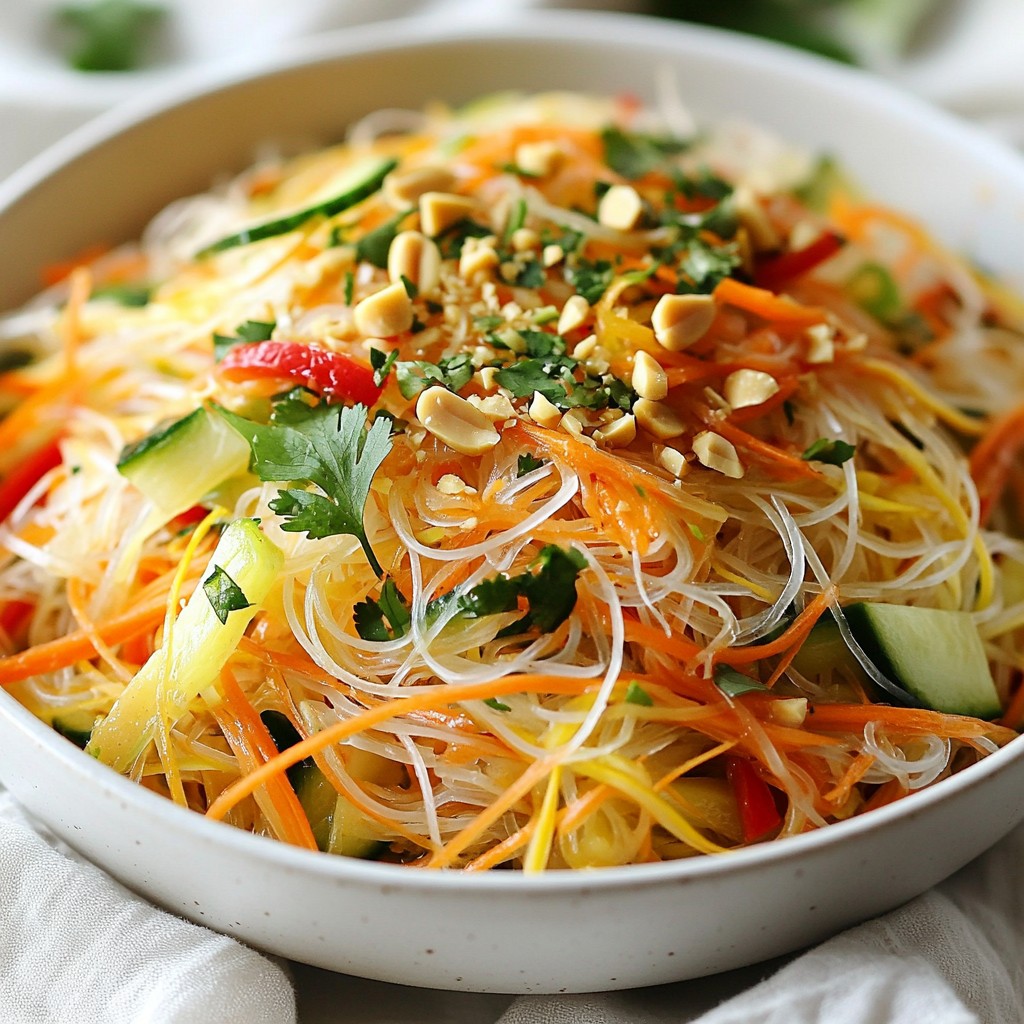
Looking for a refreshing dish that’s quick and easy? This Quick No-Cook Thai Peanut Noodle Salad is just what you need! Packed with flavor and vibrant colors, it comes together in mere minutes. Whether you're facing a busy weeknight or prepping for a picnic, this salad fits the bill. Dive in as I walk you through simple steps to create a fresh delight that’s sure to impress your taste buds!
Why I Love This Recipe
- Quick and Easy: This salad comes together in just 15 minutes, making it perfect for a busy weeknight meal or a last-minute gathering.
- Fresh and Flavorful: The combination of fresh vegetables and a creamy peanut sauce creates a vibrant and delicious dish that tantalizes the taste buds.
- Customizable: You can easily modify this recipe by adding your favorite vegetables or proteins, such as grilled chicken or tofu, to suit your preferences.
- Healthy and Nutritious: Packed with fresh veggies and healthy fats from the peanut butter, this salad is not only satisfying but also a nutritious choice.
Ingredients
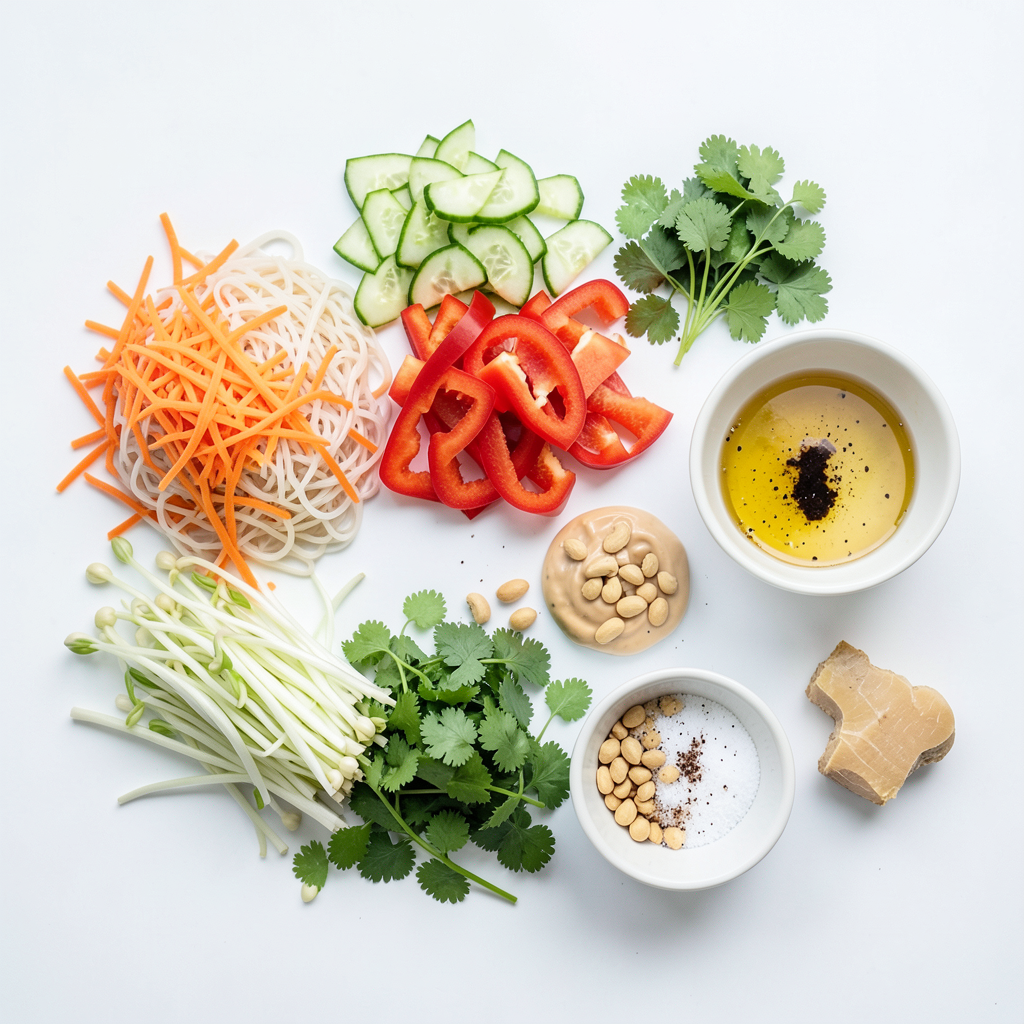
List of Ingredients
- 8 oz rice noodles
- 1 cup shredded carrots
- 1 cup red bell pepper, thinly sliced
- 1 cup cucumber, julienned
- 1 cup bean sprouts
- 1/2 cup chopped fresh cilantro
- 1/4 cup chopped peanuts (unsalted)
- 1/3 cup creamy peanut butter
- 2 tablespoons soy sauce (or tamari for gluten-free)
- 1 tablespoon toasted sesame oil
- 1 tablespoon lime juice
- 1 tablespoon honey or maple syrup
- 1 teaspoon grated ginger
- 1 clove garlic, minced
- Salt and pepper to taste
Notes on Ingredient Quality
Using fresh ingredients is key. Look for bright carrots and firm bell peppers. Choose cucumbers that are crisp. Fresh cilantro adds a nice touch to the salad. For the peanuts, unsalted ones work best. They provide crunch without overpowering flavors. The peanut butter should be creamy for a smooth sauce. Always check the soy sauce for quality. A good brand makes a big difference.
Substitutions for Common Allergens
If you're allergic to peanuts, you can use almond butter or sunflower seed butter. For soy-free options, tamari is a great choice. If you avoid gluten, ensure your soy sauce is gluten-free. You can also skip the honey and use agave syrup for a vegan option. If you are sensitive to garlic, you can leave it out or use garlic powder instead.
Step-by-Step Instructions
Preparing the Rice Noodles
Start by cooking the rice noodles. Follow the package directions for the best results. Once they are done, drain them in a colander. Rinse the noodles under cold water. This step cools them down and stops the cooking. It also prevents sticking. Set the noodles aside while you make the sauce.
Making the Peanut Sauce
In a medium bowl, add the creamy peanut butter. Pour in the soy sauce or tamari if you need it gluten-free. Add the toasted sesame oil, lime juice, and honey or maple syrup. Grate fresh ginger and add it to the mix. Mince one garlic clove and toss that in too. Whisk everything together until it's smooth. If it's too thick, add a little warm water. You want it pourable and creamy.
Combining the Salad Ingredients
Grab a large mixing bowl. Add the cooled rice noodles to it. Then, toss in the shredded carrots, sliced red bell pepper, and julienned cucumber. Next, add the bean sprouts and chopped cilantro. These fresh veggies add crunch and flavor. Mix everything gently until combined.
Dressing and Serving the Salad
Pour the peanut sauce over the noodle mixture. Toss it well to coat all the ingredients. You want every bite to be flavorful. For a nice crunch, sprinkle chopped peanuts on top. Season with salt and pepper to taste. Let the salad sit for about 10 minutes. This waiting time lets the flavors blend. Serve it in a big bowl or individual plates. Add extra cilantro and peanuts for a lovely touch. A lime wedge on the side gives a burst of freshness.
Tips & Tricks
Making Ahead for Meal Prep
You can easily make this salad ahead of time. Cook the rice noodles and mix the veggies early in the day. Keep the peanut sauce in a separate container. This keeps everything fresh. When ready to eat, just combine the noodles, veggies, and sauce. Letting it sit for a while helps the flavors blend.
Best Practices for Flavor Enhancement
To boost the taste, use fresh ingredients. Fresh lime juice makes a big difference. You can also add more ginger or garlic for a stronger flavor. If you enjoy heat, a bit of chili paste or red pepper flakes will spice things up. Don’t forget to taste and adjust the salt and pepper to your liking.
Serving Suggestions and Pairings
This salad pairs well with grilled chicken or shrimp for extra protein. You can serve it with spring rolls for a fun meal. A cold drink, like iced tea or lemonade, complements the flavors nicely. For a vibrant presentation, add lime wedges and extra cilantro on top.
Pro Tips
- Fresh Ingredients: Always use fresh vegetables for the best flavor and crunch in your salad.
- Peanut Sauce Consistency: Adjust the peanut sauce with warm water gradually to achieve your desired consistency.
- Flavor Development: Let the salad sit for a few minutes after tossing to enhance the flavors before serving.
- Customizable Add-ins: Feel free to add proteins like grilled chicken or tofu for a heartier meal.
Variations
Adding Protein Options (Tofu, Chicken, Shrimp)
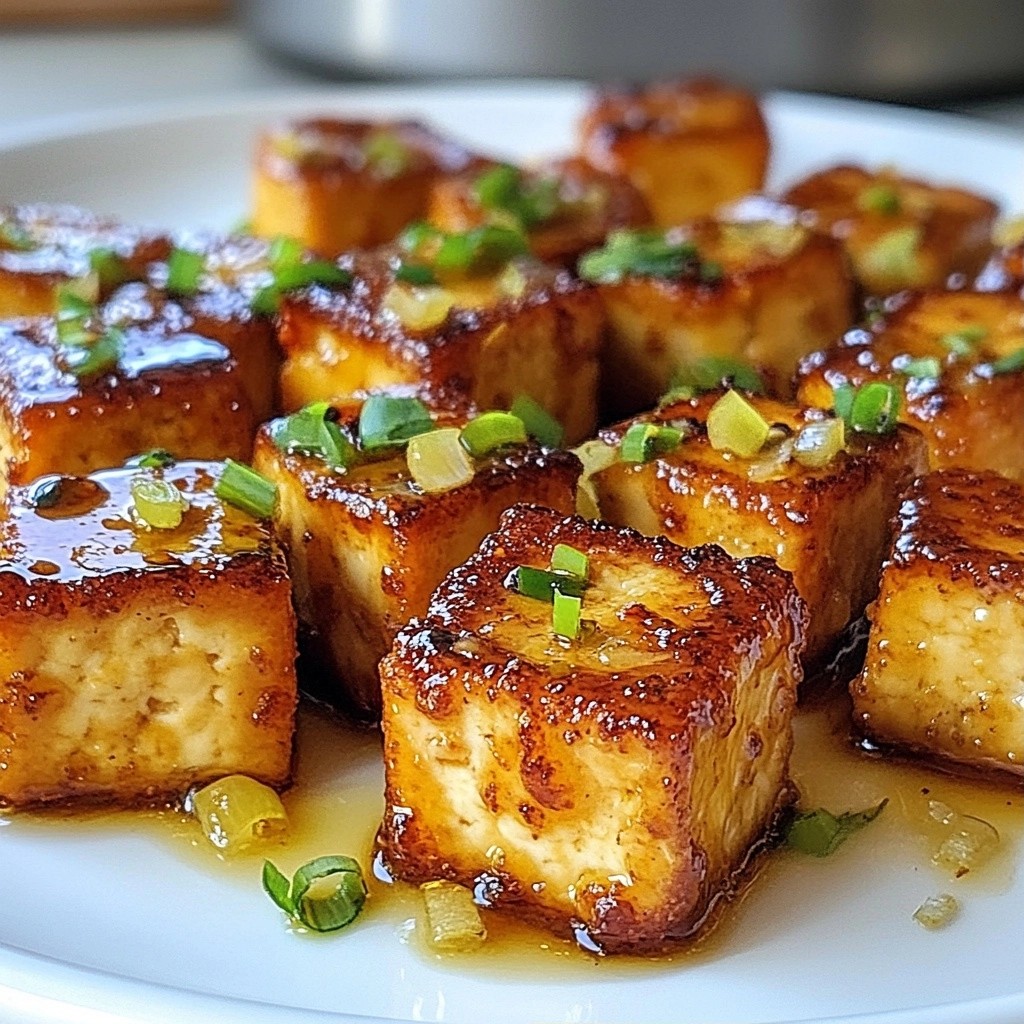
You can add protein to this salad for a full meal. Tofu works great. Use firm tofu for best results. Just press it, cube it, and toss it in. If you prefer chicken, grill or poach it first. Slice it thin and mix it in. Shrimp is another tasty option. Cook shrimp until pink and add them to the salad. Each choice adds texture and makes the meal more filling.
Incorporating Different Vegetables
Feel free to get creative with your veggies. You can swap in thinly sliced radishes for a spicy kick. Chopped broccoli or snap peas add crunch and color. Try using sweet corn for sweetness. You can also mix in leafy greens, like spinach or kale. The more colors, the better! This makes the dish not only tasty but also very appealing.
Adjusting Spice Levels
You control the heat in your salad. For mild flavor, keep it simple. If you like spice, add red pepper flakes or Sriracha to the sauce. You can also mix in sliced jalapeños for a fresh kick. Taste your sauce before mixing it in. Adjust it to suit your taste. This makes the dish perfect for everyone at your table.
Storage Info
Proper Cooling and Storing Instructions
After making the salad, let it cool down to room temperature. This step helps keep the noodles fresh. Once cooled, place the salad in a container. Cover it with a lid to keep air out. This keeps the flavors bright and tasty. If you plan to store it, eat it within two days for the best flavor.
Best Containers for Storage
Use an airtight container for the salad. Glass containers work well because they do not stain. You can also use BPA-free plastic containers. Make sure they fit your salad snugly. This helps keep it crisp and fresh. If you have leftovers, use smaller containers for easy packing.
Shelf Life and Reheating Tips
You can store this salad in the fridge for up to two days. But it tastes best fresh. Do not freeze the salad, as the noodles may become mushy. If you want to warm it up, gently heat the noodles in a pan. Add a splash of water or sauce to keep it moist. Enjoy your salad cold or warm based on your mood!
FAQs
Can I use a different type of noodle?
Yes, you can use other noodles. Rice noodles work well, but you can try whole wheat, soba, or even zucchini noodles. Just cook or prepare them as needed. Each type gives a unique taste and feel to the salad. Remember that cooking times may vary.
How long can I store the salad?
You can store the salad for up to three days in the fridge. Keep it in an airtight container to maintain freshness. The flavors will blend more over time, but the veggies may lose some crunch. For best taste, eat it within a day or two.
What are some easy ways to customize the flavor?
There are many ways to change the flavor of this salad. You can add more lime juice for extra zest or sprinkle in some chili flakes for heat. Try different veggies like snap peas or broccoli. You can even swap out peanut butter for almond or cashew butter for a twist.
You now have a clear guide to making a delicious rice noodle salad. We discussed the key ingredients and how their quality matters. You can easily substitute for allergens, too. Step-by-step, we walked through preparing the noodles, making the peanut sauce, and combining everything. Don't forget to try our tips for meal prep and flavor boosts. Explore different proteins and veggies for tasty variations. Finally, remember how to store your dish for lasting freshness. Enjoy your cooking and feel free to adjust it as you like!